Middle East physics collaboration plans for the future
Authors/Creators
Description
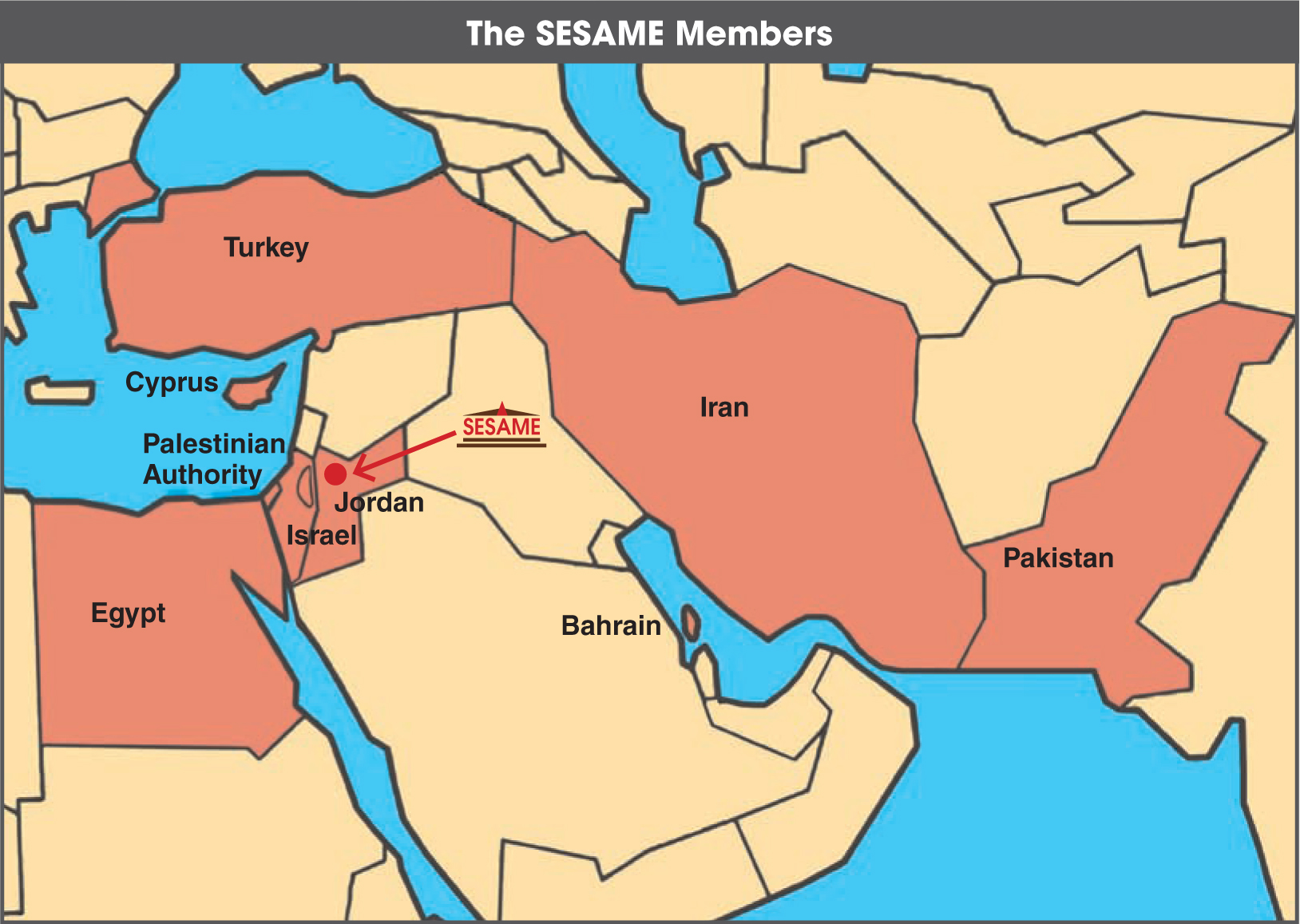
The SESAME initiative, the Synchrotron-light for Experimental Science and Applications in the Middle East, is making progress. At a recent SESAME Council meeting at the end of May, Jordan, Iran and Israel confirmed their cash contributions to the project’s storage ring. The Palestinian Authority and Pakistan have confirmed their in-kind support and Egypt and Turkey are taking steps to allow their participation. Technically planned to start operation in 2015, SESAME has begun to show significant potential as a science for peace initiative in the Middle East.
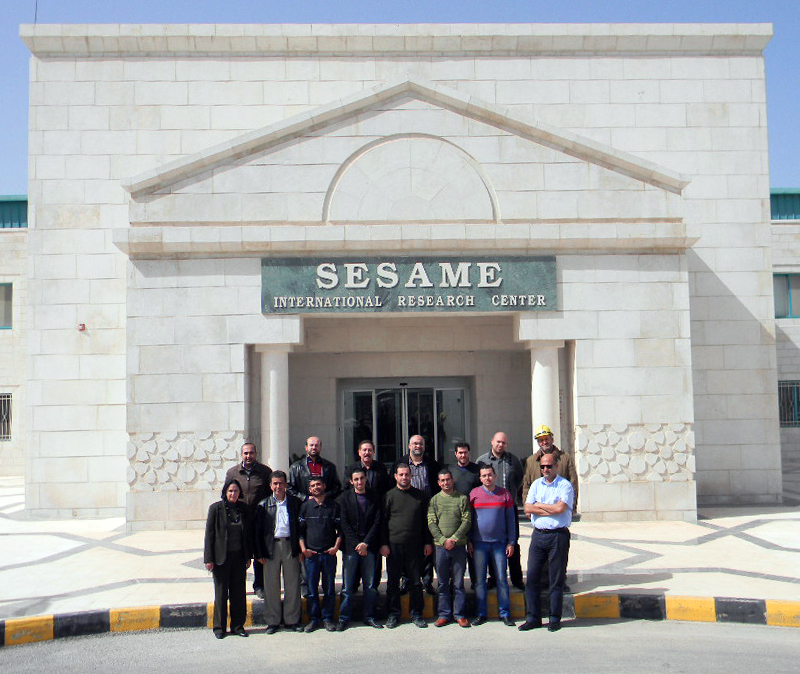
Jordan has provided the land and an elegant building that will house the accelerator complex and associated infrastructure; a number of states, organizations and synchrotron light laboratories have donated the injector and booster, beam lines or components, support for infrastructures, and training of scientists and engineers; the SESAME members cover the laboratory operating cost These are but some the magic ingredients that are making the SESAME project become a reality.
Built in a region where peaceful interactions among neighbouring countries remains a challenging goal, SESAME is a strong evidence of the will to overcome the current difficulties in the name of and for the sake of science. SESAME will be a third-generation light source that will compete with other – existing or in construction – light-source facilities around the world. “CERN is supporting this initiative by sharing its expertise in particular for the magnet system. In 2010, CERN and SESAME Directors signed a collaboration protocol. As a first step, CERN has provided a review of the SESAME magnet system of the main ring, the construction of which will hopefully start this year,” explains Jean-Pierre Koutchouk, CERN’s representative for the SESAME project. “We have suggested some possible improvements and also agreed to provide our support in other domains, such as particle physics simulations, safety and protection, instrumentation, and access to CERN IT infrastructure. CERN’s experts (active or retired) will deliver training to SESAME personnel on request.”
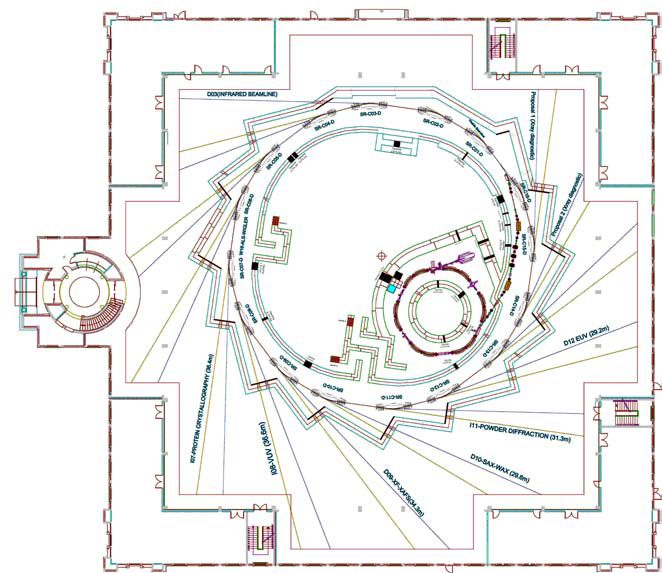
While the necessary preliminary studies and further negotiations are taking place at different levels, the construction of SESAME is on-going: the radiation shielding wall is complete and the hall is ready for installation of the accelerators. The injector and booster synchrotron will be commissioned with a beam early next year. The 2.5 GeV electron storage ring has been designed by the SESAME team and passed a number of reviews. “As the region’s first major international research centre, SESAME will contribute to regional scientific, technical and economic development at a crucial stage in the history of the Middle East. It will be a focal point for regional scientific collaboration and for cross-border networking,” said Her Royal Highness Princess Sumaya Bint El Hassan, President of the El Hassan Science City in Amman (Jordan), when she welcomed the delegates of the SESAME Council.
“Following the review, a more ambitious goal will be for CERN to launch the construction of the main ring magnetic system, in close collaboration with the SESAME laboratory. To this end, CERN is seeking the political and financial support of the European Union and is preparing for this contribution,” says Koutchouk. “SESAME recalls the beginnings of CERN’s history, when previously conflicting countries decided to peacefully start a common scientific project. It is thus important for CERN to provide concrete support for the SESAME initiative and help make it a reality.”
Other (French)
Le projet SESAME (Synchrotron-light for Experimental Science and Applications in the Middle East) avance. Lors d’une réunion du Conseil de SESAME qui s’est tenue fin mai, la Jordanie, l’Iran et Israël ont confirmé leur apport de financement à l’anneau de stockage du synchrotron. L’Autorité palestinienne et le Pakistan, quant à eux, ont confirmé leur contribution en nature, et l’Egypte et la Turquie prennent actuellement des dispositions pour pouvoir également participer au projet. Si, techniquement, tout devrait être prêt pour 2015, SESAME a déjà commencé à démontrer son grand potentiel en tant qu’initiative de paix au Moyen-Orient.
La Jordanie a fourni le terrain ainsi qu'un élégant bâtiment qui abritera le complexe d’accélérateur et l’infrastructure nécessaire ; plusieurs États, organisations et laboratoires utilisant le rayonnement synchrotron ont proposé d’offrir l’injecteur et le booster, les lignes de faisceau ou les éléments associés, l’appui aux infrastructures, ainsi que la formation des scientifiques et des ingénieurs ; les membres de SESAME prennent en charge les coûts de fonctionnement du laboratoire. Voilà quelques exemples des ingrédients magiques qui permettront au projet SESAME de voir le jour.
Construit dans une région où l’instauration de relations pacifiques entre pays voisins reste un enjeu crucial, SESAME est la preuve solide d’une volonté de surmonter les difficultés actuelles au nom et dans l’intérêt de la science. SESAME sera une source de lumière de troisième génération qui rivalisera avec les autres sources de lumière dans le monde, qu’elles soient déjà existantes ou en construction. « Le CERN soutient cette initiative en offrant son savoir-faire, notamment pour ce qui est du système d'aimants.En 2010, les directeurs du CERN et de SESAME ont signé un protocole de collaboration. Dans un premier temps, le CERN a procédé à l’analyse du système d’aimants de l’anneau principal de SESAME, dont la construction devrait normalement commencer cette année, explique Jean-Pierre Koutchouk, représentant du CERN auprès du projet SESAME. Nous avons proposé certaines améliorations et convenu d'apporter notre appui dans d'autres domaines, par exemple pour les simulations en physique des particules, la sécurité et la protection, l’instrumentation et l’accès à l’infrastructure informatique du CERN. Des spécialistes du CERN (actifs et retraités) dispenseront sur demande une formation au personnel de SESAME. »
Alors que les études préliminaires et d’autres négociations financières sont en cours à différents niveaux, la construction de SESAME va bon train : le mur de blindage antiradiation est terminé et le hall est prêt pour accueillir les accélérateurs. L’injecteur et le synchrotron booster seront mis en service avec faisceau au début de l’année prochaine. L’anneau de stockage d’électrons à 2,5 GeV a été conçu par l’équipe de SESAME et a fait l’objet de plusieurs examens. « Grâce à son statut de premier centre international de recherche du Moyen-Orient, SESAME contribuera au développement scientifique, technique et économique de la région à l’heure où celle-ci vit une période cruciale de son histoire. Il sera un centre névralgique pour la collaboration scientifique régionale et les réseaux transfrontaliers », a déclaré Son Altesse Royale la Princesse Sumaya Bint El Hassan, présidente de la Cité des Sciences El Hassan à Amman (Jordanie), lorsqu’elle a accueilli les délégués du Conseil de SESAME.
« Après cette phase d’analyse, un objectif plus ambitieux sera pour le CERN de lancer la construction du système magnétique de l’anneau principal, en collaboration étroite avec le laboratoire SESAME. Pour cela, le CERN sollicite l’appui politique et financier de l’Union européenne et se prépare à cette perspective », indique Jean-Pierre Koutchouk. Le projet SESAME nous rappelle les débuts de l’histoire du CERN, lorsque des pays qui s’étaient affrontés par le passé ont décidé de se lancer pacifiquement dans un projet scientifique commun. Il est donc important que le CERN apporte un soutien concret à SESAME et aide ce projet à voir le jour. »
Files
ses2_image.jpg
Additional details
Identifiers
- CDS
- 1365725
- CDS Report Number
- BUL-NA-2011-178
Related works
- Is published in
- Periodical issue: vf6gf-3dt93 (CDS)
- Periodical issue: mzy2m-djv42 (CDS)