From the CERN web: antihydrogen, ROOT, protons and more
Authors/Creators
Description
This section highlights articles, blog posts and press releases published in the CERN web environment over the past weeks. This way, you won’t miss a thing...
Where no-one has gone before
30 September – CMS Collaboration
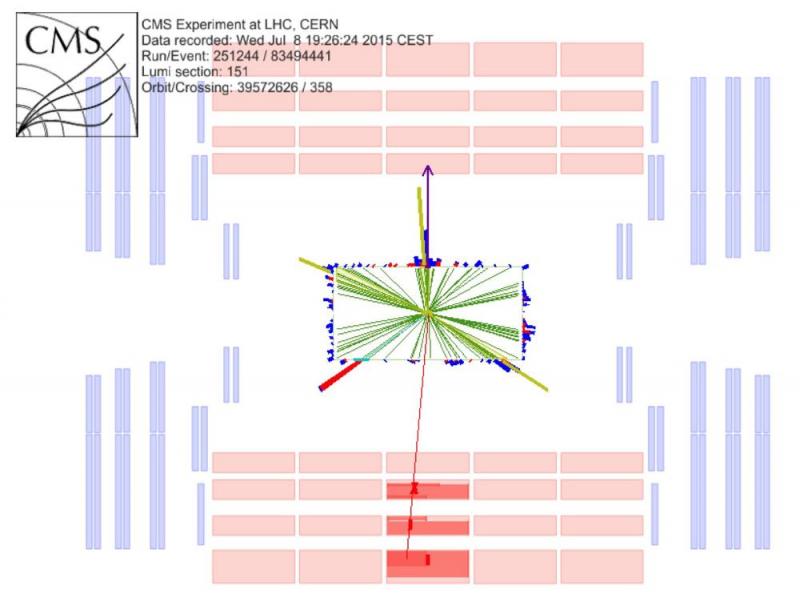
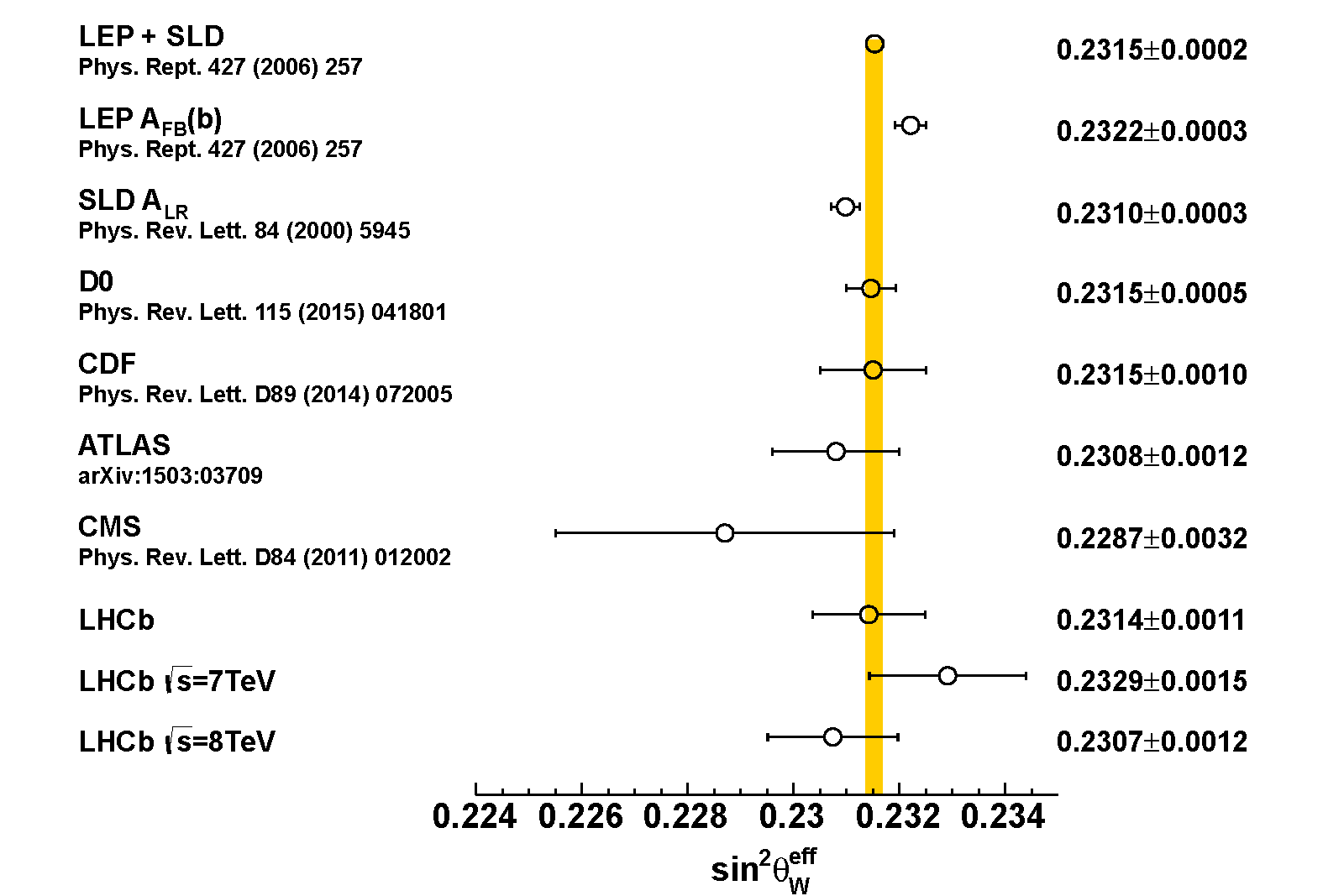
Born at the end of the ’70s, I was still in school when the heaviest of all quarks was discovered at the Tevatron: the top quark. Back then I had no idea what it was about. But reading an article in the newspaper I felt the excitement surrounding such a discovery. My interest for the smallest and most basic building blocks of the universe had been awakened. When I joined the CMS Collaboration in 2014, I had no doubt that the first measurement I would like to do was that of the production rates of top-quark pairs at the new energy regime of 13 TeV. Shortly after the restart of the LHC in summer this year, we began a journey where no-one has gone before.
Antihydrogen at CERN: 20 years and still going strong
29 September – by Harriet Jarlett
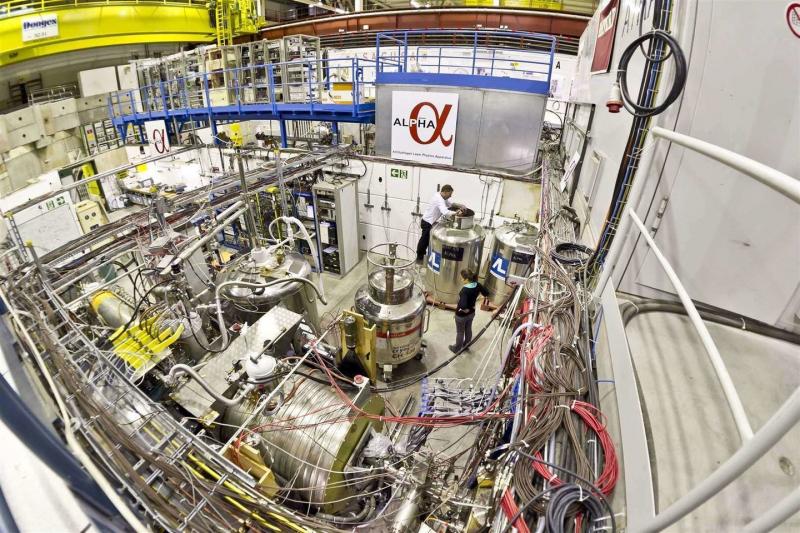
Twenty years ago a team of scientists at CERN led by Walter Oelert succeeded in producing the first atoms made of antimatter particles.
The nine atoms of antihydrogen – the antimatter counterpart of the simplest atom, hydrogen – were made at CERN’s Low Energy Antiproton Ring (LEAR) facility. This world premiere happened exactly 30 years after the discovery of the antiproton and opened a new chapter in the study of antimatter.
Big data takes ROOT
29 September – by Barbara Warmbein
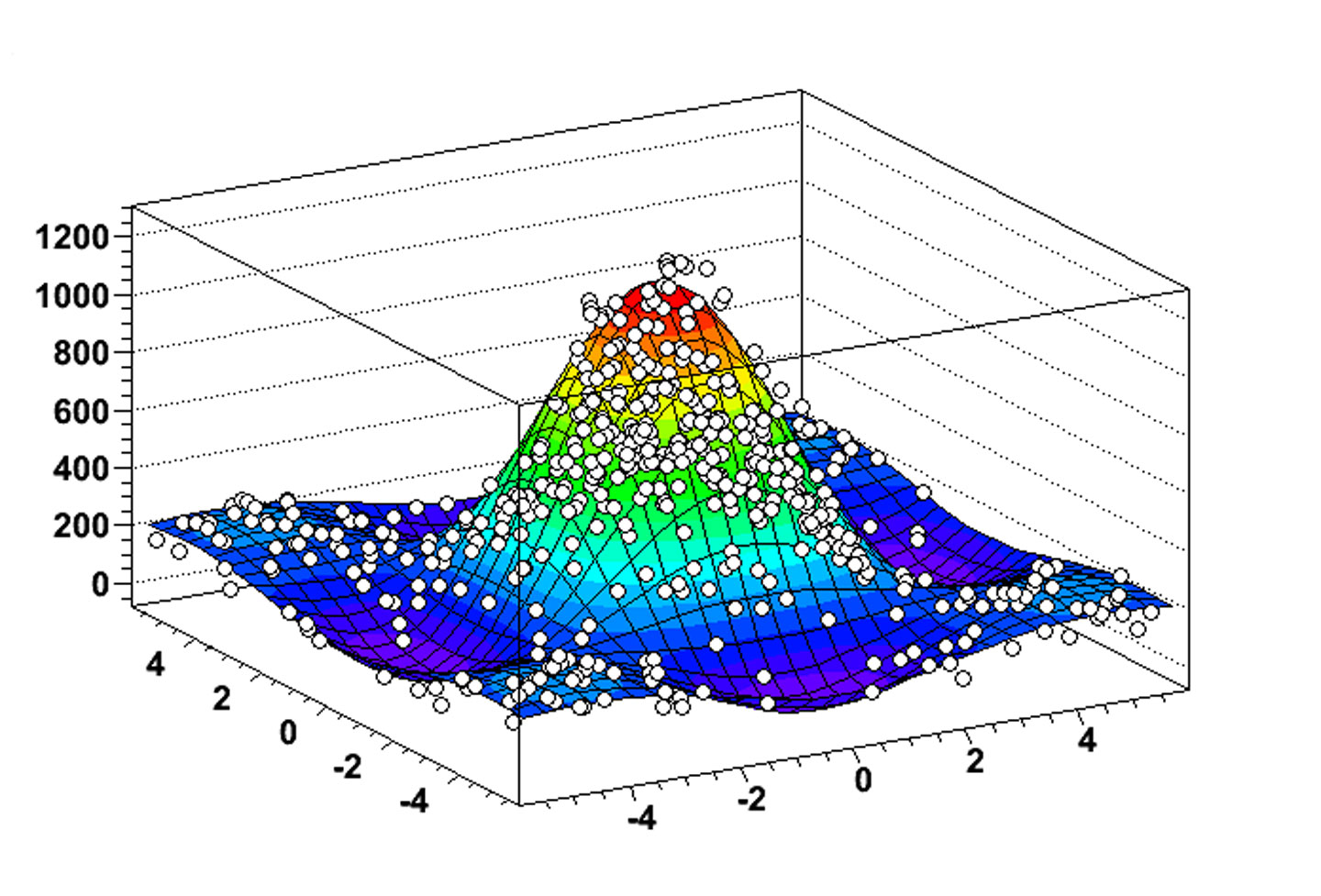
Particle physicists don’t break into a sweat when they face big data. On the contrary: they need it in order to be able to tell a rare process from a common one. Reliable statistics are essential here, and physicists gather statistics by producing as many particle collisions as possible. At the LHC, protons collide some 1 billion times per second, and the CERN data centre stores more than 30 petabytes of data per year from the LHC experiments.
The most precise picture of the proton
25 September – CERN Courier
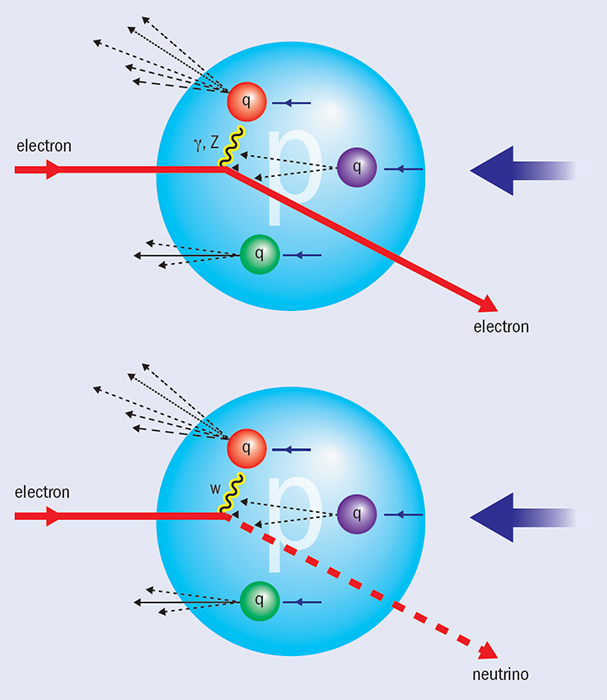
After 15 years of measurements and another eight years of analysis and calculations, the H1 and ZEUS collaborations have published the most precise results to date about the innermost structure and behaviour of the proton.
The diagrams show the neutral-current (top) and charged-current (bottom) deep-inelastic electron–proton scattering processes.
The birds and the beams: Biodiversity at CERN
22 September – by Cian O’Luanaigh
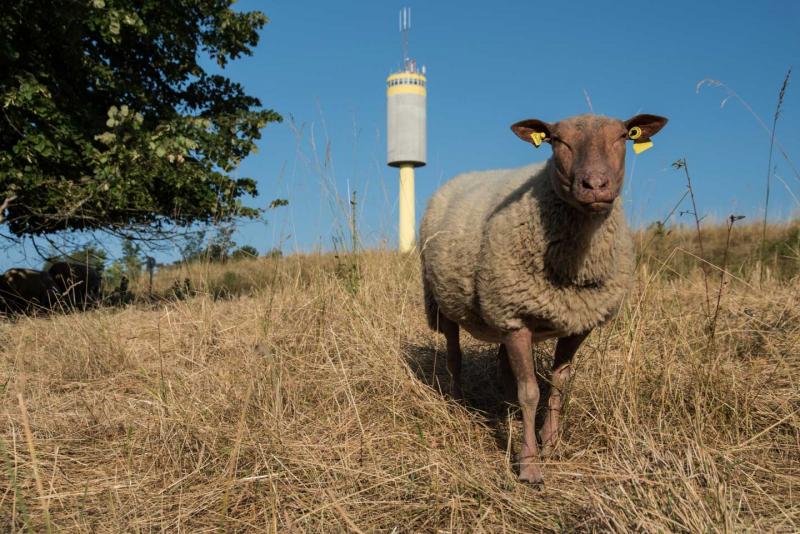
It's 7am at CERN and sheep are grazing on the roof of the world's first hadron collider.
Though the Intersecting Storage Rings have lain dormant since 1984, this morning the air resonates with the sound of bells and bleating as shepherd Enrico D'Ippolito inoculates his herd. Kin, the 3-year-old border collie, jumps against makeshift metal gates, whining and snapping to keep the ewes moving. “They're very sweet-natured,” grins D'Ippolito. “And they keep me busy!”
Other (French)
Dans cette rubrique, vous trouverez une compilation des articles, blogs et communiqués de presse parus dans l’environnement web du CERN au cours des dernières semaines. Pour que plus rien ne vous échappe.
Où personne n'a jamais été
30 septembre – Collaboration CMS
Seuls 3% des quarks top se désintègrent en une paire électron-muon, mais c’est le canal que la Collaboration CMS a choisi d’explorer pour l’étude du quark top avec le redémarrage du LHC à 13 TeV.
En étudiant ses premières données, la Collaboration a obtenu des résultats en accord avec les prédictions du Modèle Standard, écartant à ce jour toute perspective de découverte d'une nouvelle physique.
L’antihydrogène au CERN : 20 ans déjà
29 septembre – par Harriet Jarlett
Il y a vingt ans, une équipe de scientifiques du CERN, sous la direction de Walter Oelert, réussissait à produire les premiers atomes constitués de particules d'antimatière.
Les neufs atomes d’antihydrogène (antimatière homologue de l’atome le plus simple, l’hydrogène) – ont été produits au LEAR (Anneau à antiprotons de basse énergie). Cette première mondiale s'est produite exactement 30 ans après la découverte de l'antiproton et a ouvert un nouveau chapitre dans l'étude de l'antimatière.
ROOT, l’outil qui traite des pétaoctets de données
29 septembre – par Barbara Warmbein
Depuis une vingtaine d’années, l’outil open source ROOT, développé par le CERN et Fermilab, est LE logiciel utilisé par les physiciens des particules pour traiter les énormes quantités de données générées par leurs accélérateurs.
Bien que particulièrement polyvalent, ROOT n’est pas parfait, c’est pourquoi les développeurs informatiques cherchent sans cesse à l’améliorer. L’équipe ROOT basée au CERN vient justement de publier la version 6 du logiciel, qui présente de nombreuses améliorations… et elle travaille déjà sur la version 7, qui devrait être publiée lors du prochain long arrêt technique du LHC.
L’image la plus précise du proton
25 septembre – CERN Courier
Après 15 années de mesures et huit années supplémentaires d’analyses et de calculs, les collaborations H1 and ZEUS ont publié les résultats les plus précis à ce jour de la structure profonde et du comportement du proton. Les deux collaborations, qui ont enregistré, de 1992 à 2007, des données auprès du collisionneur électron-proton HERA, à DESY, ont combiné près de 3 000 mesures de sections efficaces inclusives profondément inélastiques. La QCD et les effets électrofaibles sont également analysés avec une grande précision dans le même ensemble de données, démontrant brillamment la validité du Modèle standard.
Le petit labo dans la prairie, de la biodiversité au CERN
22 septembre – par Cian O’Luanaigh
Il est sept heures du matin. Des moutons broutent paisiblement, comme tous les moutons du monde. Sauf que leur pâturage se trouve au beau milieu du CERN, plus exactement au dessus du premier collisionneur de protons du monde. Les Anneaux de stockage à intersections (ISR) sont arrêtés depuis 1984. Mais ce matin, la machine résonne de bêlements et de tintements de clochettes tandis que le berger Enrico D'Ippolito y dirige son troupeau.
Files
alpha_image.jpg
Files
(703.7 kB)
| Name | Size | Download all |
|---|---|---|
|
md5:57398443c3d08d767a6e6401f035073d
|
117.7 kB | Preview Download |
|
md5:8b778edc34119e17f2817f7abc30d18a
|
95.6 kB | Preview Download |
|
md5:7cc3c6afcb00b47d885c35d1ab700cc2
|
162.6 kB | Preview Download |
|
md5:f26576853f4c7950369722fdd751f8f1
|
47.9 kB | Preview Download |
|
md5:78474c48ff3cdf5521d5ebbe6f85d12d
|
249.7 kB | Preview Download |
|
md5:ce2cb508ec2917f43e9113e89afa2e25
|
30.2 kB | Preview Download |
Additional details
Identifiers
- CDS
- 2056374
- CDS Report Number
- BUL-NA-2015-214
Related works
- Is published in
- Periodical issue: sqnhp-sd564 (CDS)
- Periodical issue: ynfzb-j2y11 (CDS)