Rafael Armenteros (1922-2004)
Authors/Creators
Description
Rafael Armenteros passed away on Friday, 5 March, to the immense sadness of his family and friends. Having begun his scientific career at the University of Manchester, he took part in the observation of cosmic rays at the Pic du Midi laboratory with Professors Blackett and Butler and participated in the research of the Ecole Polytechnique team led by Professor Leprince-Ringuet consisting of Gregory, Lagarrigue, Muller and Peyrou. He subsequently worked at CERN with Peyrou, who was by then Head of the Track Chamber (TC) Division.
In this early part of his professional career, he was directly involved in the discovery of many elementary particles, including two strange neutral particles (Lambda and K0), and in the observation of the decay of the Xi-minus into a Lambda and a Pi-minus. He then took part in CERN's most famous experiments, the bubble chamber experiments, in which he was one of the leading figures right up to the last one. Following the exceptional scientific results of the 1960s, these experiments cleared the way for another rich harvest of new particles. Rafael was the co-author of numerous internationally renowned contributions in the fields of meson spectroscopy, proton-antiproton annihilation and the understanding of strong interactions. He co-developed the "Armenteros-Podolanski plot" event selection technique, which is still used today in heavy ion physics. Thanks to a trick of the alphabet, Alvarez and Armenteros were the particle physicists of the time whose names were the most frequently cited.
It should be remembered that, in those days, the members of a physics experiment collaboration could be counted on two hands, which allowed them to be personally involved in the experiment from start to finish, from the photographing of events right through to their interpretation. The analysis of experiments was done in small groups. With his enthusiasm and human warmth, Rafael had an exceptional gift for inspiring and guiding young undergraduates and PhD students in their first steps in physics. Sharing their wonderment at each new observation, he always seemed to be inspired by the words of one of his favourite Spanish poets, Antonio Machado: "caminante no hay camino, se hace camino al andar" ("Wanderer, there is no way, you make the way as you go").
Rafael Armenteros carried with him the troubles of his country, the 1936-1939 Civil War and an immense frustration following the triumph of dictatorship. The Spanish Republic funded his higher education in the United Kingdom and he became one of the great Spanish exiles who made important contributions to world culture.
Towards the end of the 1970s, as a new age was dawning for Spain, Rafael made an emotional return to his homeland after a long absence. From that time onwards, he became wholeheartedly involved in shaping the development of particle physics in Spain. He made ever more frequent trips to his homeland and could be proud of the decisive role he played in Spain's return to CERN.
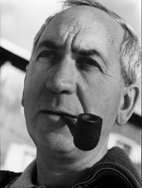
One memory in particular stands out among the many we will retain of him: that of evenings spent in his office for no specific reason other than a feeling of satisfaction that came from having made progress in an analysis. We would talk together, a glass of excellent Rioja in our hands, while Rafael drew deeply on his pipe. An atmosphere of serenity reigned in which everyone, without being really aware of it, experienced a simple sense of well-being engendered by the buzz of friendly conversation.
With the passing-away of Rafael Armenteros, we have lost one of the physicists of CERN's pioneering era and one of the key players in the first discoveries that helped to establish the Laboratory's renown. We have also lost a friend with whom we shared some inspiring, unforgettable hours.
His friends and colleagues
Other (French)
Rafael Armenteros nous a quittés le vendredi 5 mars, laissant sa famille et ses amis dans une profonde tristesse. Il avait débuté sa carrière de chercheur à l'Université de Manchester, participé à l'observation de rayons cosmiques au laboratoire du Pic du Midi avec les Professeurs Blackett et Butler, puis collaboré aux recherches de l'Ecole Polytechnique avec l'équipe du Professeur Leprince-Ringuet : Gregory, Lagarrigue, Muller et Peyrou, avant de rejoindre au CERN ce dernier, devenu chef de la Division Chambres à traces (TC).
Dans cette première phase de sa vie professionnelle, il fut directement associé à la découverte de nombreuses particules élémentaires dont deux particules neutres étranges - Lambda et K0 - et à l'observation de la désintégration du Xi minus en Lambda et Pi minus. Il participa ensuite aux expériences de chambre à bulles, les plus fameuses conduites au CERN, dont il fut l'un des maîtres d'oeuvre jusqu'à la dernière. Après l'exceptionnelle moisson scientifique des années 60, on y défrichait encore un champ riche de nouvelles particules. Rafael fut ainsi le co-auteur de nombreuses contributions reconnues mondialement dans le domaine de la spectroscopie des mésons, de l'annihilation des protons-antiprotons et de la compréhension des interactions fortes. Il co-développa la technique de sélection d'événements dite « Armenteros-Podolanski plot », encore utilisée de nos jours en physique des ions lourds. On se souvient aussi, facétie de l'ordre alphabétique, qu'Alvarez et Armenteros étaient alors les physiciens des particules les plus cités.
Il faut se rappeler qu'à cette époque les collaborateurs d'une expérience de physique se comptaient sur les dix doigts, ce qui était une chance, car il était alors possible de participer personnellement à une expérience d'un bout à l'autre : de la saisie photographique d'événements jusqu'à leur interprétation physique. Les analyses expérimentales se conduisaient en petits groupes. Rafael savait merveilleusement animer, guider par son enthousiasme, sa chaleur humaine les jeunes étudiants et doctorants dans leur premier pas dans la physique. S'étonnant avec eux de toute observation nouvelle, il paraissait s'inspirer en permanence d'un de ses poètes espagnols préférés, Antonio Machado, qui prétendait que : «caminante no hay camino, se hace camino al andar» (quand tu marches, ne cherche pas le chemin, fais ton chemin en marchant).
Rafael Armenteros portait en lui le drame de son pays, la guerre civile de 1936-1939 et une frustration immense après le triomphe de la dictature. La République Espagnole prit en charge ses études supérieures au Royaume-Uni et Rafael devint l'un de ces « Grands d'Espagne » en exil qui apportèrent d'importantes contributions à la culture mondiale.
Vers la fin des années 70, à l'aube d'une nouvelle époque pour l'Espagne, Rafael décida de rentrer, après une longue absence, dans son pays natal, non sans une grande émotion. A partir de ce moment, il aida résolument à planifier le développement de la physique des particules espagnole. Ses voyages dans son pays se multiplièrent et il put se féliciter intérieurement d'avoir pleinement participé au retour de l'Espagne au CERN.
Parmi les nombreux souvenirs qu'il laisse, reste une image familière : celle de soirées passées dans son bureau sans raison précise, si ce n'est un sentiment de satisfaction, lié au progrès dans une analyse. On devisait entre collègues, un verre d'excellent rioja à la main, lui, tirant des bouffées généreuses de sa pipe. Il s'en dégageait une atmosphère de sérénité où, sans vraiment le réaliser, chacun ressentait un bien-être simple, celui d'une communication amicale autour de lui.
Avec Rafael Armenteros, nous perdons l'un des physiciens de l'époque pionnière du CERN, de ceux qui furent les acteurs des premières découvertes qui contribuèrent à établir la renommée du Laboratoire. Nous perdons aussi un ami, avec qui nous avons partagé des heures enrichissantes, inoubliables.
Ses amis et collègues
Files
na-2004-060_Armenteros-W.JPG
Files
(21.5 kB)
| Name | Size | Download all |
|---|---|---|
|
md5:ce3fa294cbbeae0295bef217ee51de4f
|
21.5 kB | Preview Download |
Additional details
Identifiers
- CDS
- 726447
- CDS Report Number
- BUL-NA-2004-060
- Aleph number
- 000015320MMD