First H- beam accelerated at Linac4: 3MeV done, 157 MeV to go!
Authors/Creators
Description
On 14 November, the first H- (one proton surrounded by two electrons) beam was accelerated to the energy of 3 MeV in the Linac4 - the new linear accelerator that will replace Linac2 as low-energy injector in the LHC accelerator chain.
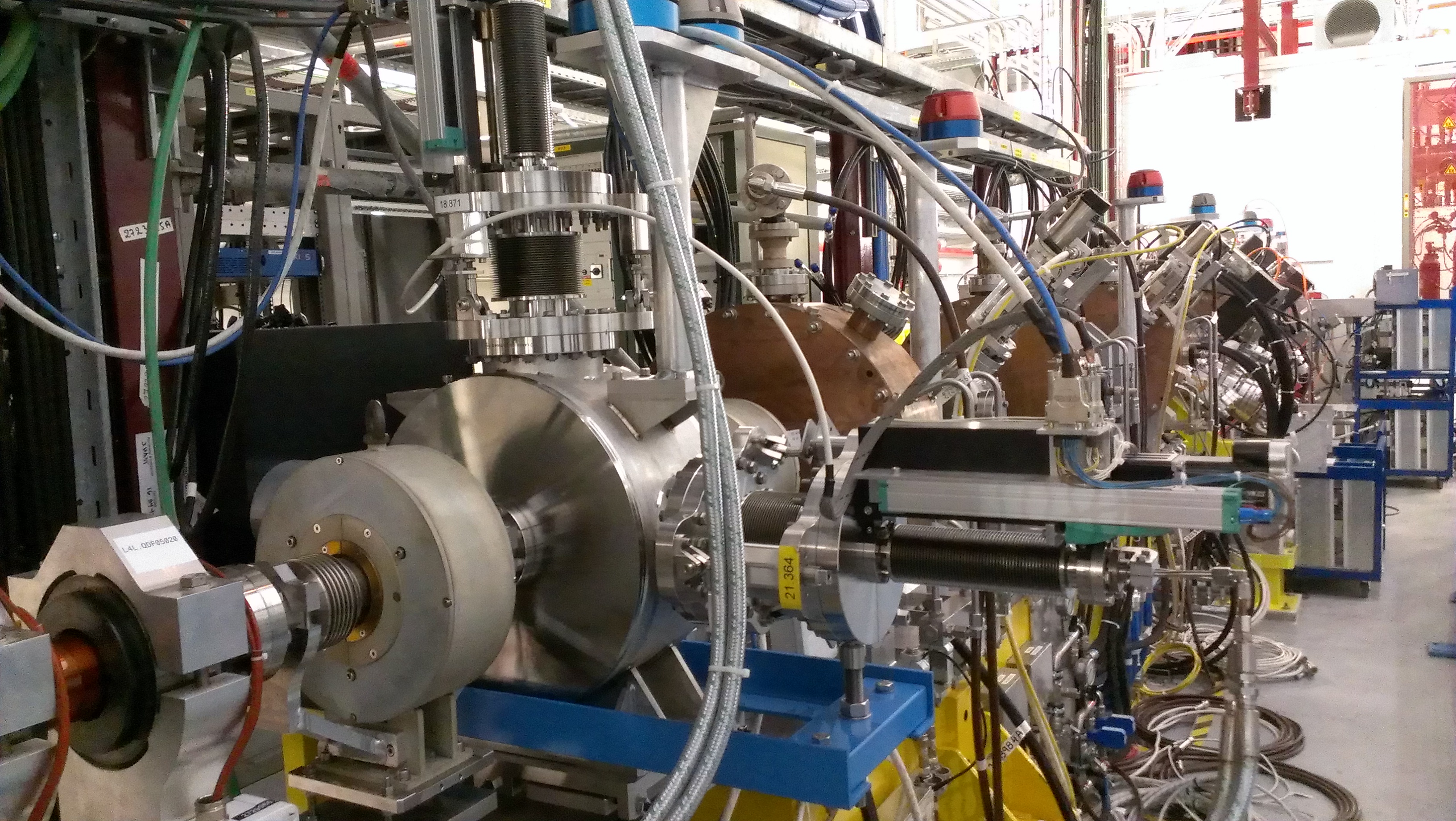
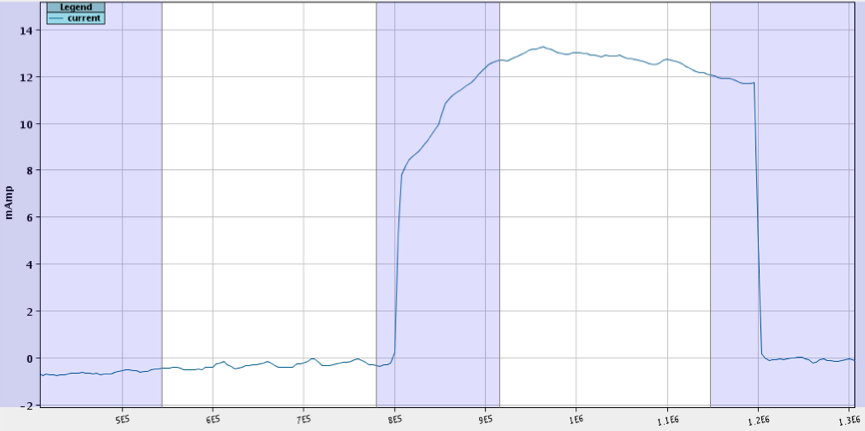
A view of the Linac4 taken during the recent tests (top image) and the current measured by the instruments at the end of the acceleration line on 14 November (bottom image). Images: Linac4 collaboration.
Using the recently installed Radio Frequency Quadrupole (RFQ) accelerator, 13 mA of current were accelerated to the energy of 3 MeV.
After the successful commissioning of the Linac4 RFQ at the 3 MeV test stand completed during the first months of 2013, the whole equipment (composed of the RFQ itself, the following Medium Energy Beam Transport line and its diagnostic line) were moved to the Linac4 tunnel during summer and installed in their final position. In the meantime, a new ion source was assembled, installed and successfully commissioned in the Linac4 tunnel. It was ready on time, at the end of October, to deliver the required beam at the RFQ entrance.
After a short radio-frequency commissioning required to operate it, the beam was accelerated and transported to the beam dump at the end of the diagnostic line. After this succesful initial step, three more RF structures will be progressively installed to take the H- beam to the final energy of 160 MeV.
Other (French)
Le 14 novembre, le premier faisceau de H- (un proton entouré de deux électrons) a été porté à une énergie de 3 MeV dans le Linac 4, le nouvel accélérateur linéaire qui remplacera le Linac 2 comme injecteur de basse énergie dans la chaîne d'accélérateurs du LHC.
Le Linac 4, pendant les essais réalisés récemment (en haut) et le courant mesuré par les instruments à la fin de la ligne d'accélération, le 14 novembre (en bas). Images : collaboration Linac 4.
Grâce au quadripôle à radiofréquence (RFQ) récemment installé, 13 mA de courant ont été portés à une énergie de 3 MeV.
Après la mise en service du RFQ du Linac 4 au banc d’essai à 3 MeV réalisée pendant les premiers mois de 2013, tous les éléments (c’est-à-dire le RFQ lui-même, la ligne de transport de faisceau à moyenne énergie et sa ligne de diagnostic) ont été transportés jusqu’au tunnel du Linac 4 pendant l'été et installés dans leur position finale. Dans l’intervalle, une nouvelle source d’ions a été assemblée, installée puis mise en service avec succès dans le tunnel du Linac 4. Cette source était prête à temps, fin octobre, pour fournir le faisceau voulu à l’entrée du RFQ.
Après une brève mise en service avec radiofréquence du système, le faisceau a été accéléré et acheminé jusqu’à l’arrêt de faisceau situé à l'extrémité de la ligne de diagnostic. Trois autres structures RF seront installées progressivement pour amener le faisceau à l’énergie finale de 160 MeV.
Files
LINAC4_1_image.jpg
Files
(2.3 MB)
| Name | Size | Download all |
|---|---|---|
|
md5:b749a0a8c2d8444d0c26ec30b953a780
|
2.2 MB | Preview Download |
|
md5:816ed4d6040ef859abe5ea30219bf3ae
|
100.1 kB | Preview Download |
Additional details
Identifiers
- CDS
- 1630803
- CDS Report Number
- BUL-NA-2013-257
Related works
- Is published in
- Periodical issue: mrtdp-sjz23 (CDS)
- Periodical issue: fenek-47436 (CDS)